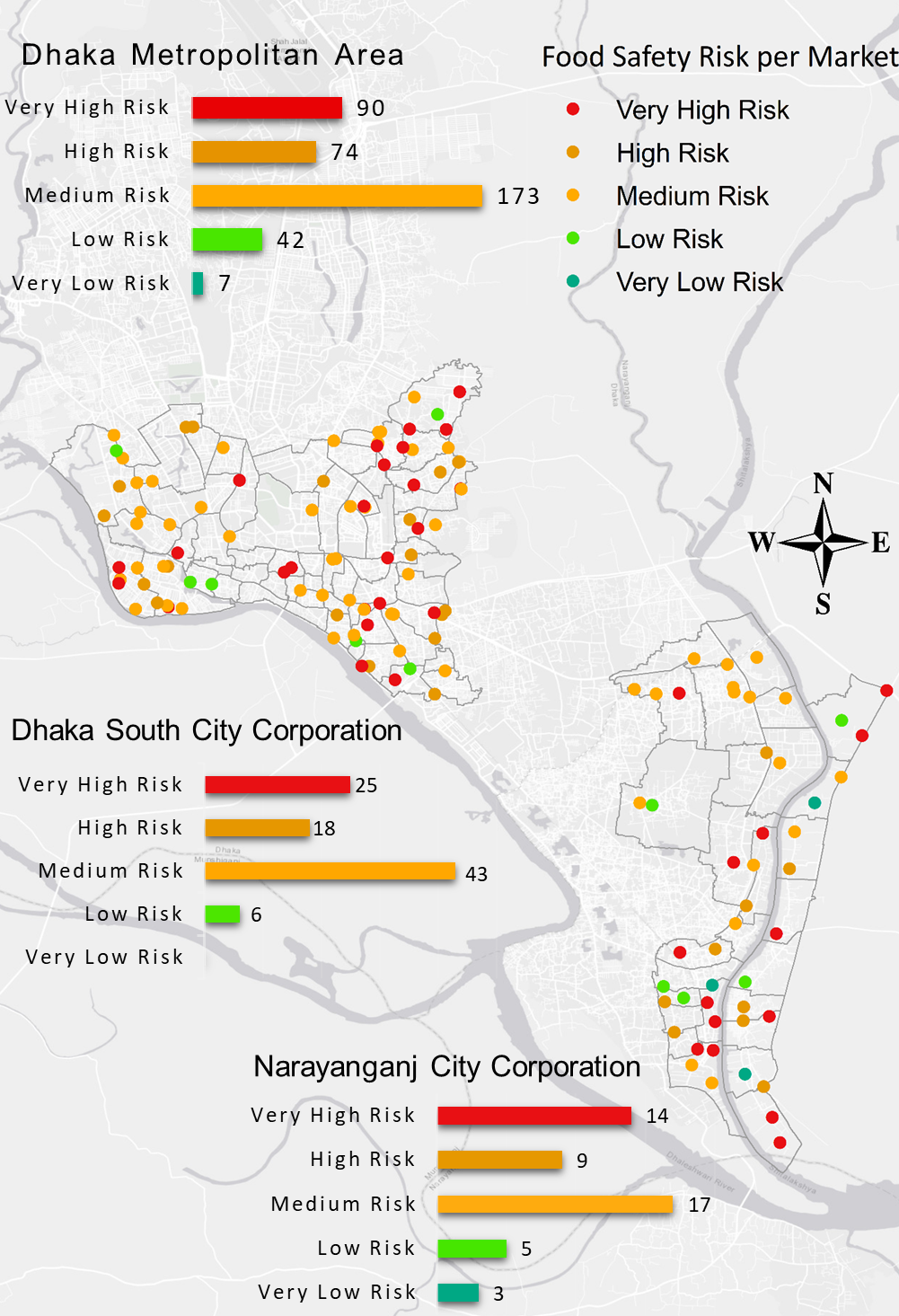
Wet-markets are popular locations for buying affordable food in Dhaka. Widely circulated news of food contamination has made consumers suspicious about the quality of food on wet-markets. The chance of infection by a foodborne disease cannot be neglected. Seven percent of consumers indicate to have suffered from diarrhea as a result of eating contaminated food in the past month. Every year, 30 million people suffer from food poisoning in Bangladesh. What is the source of this contamination and what potential measures can reduce food-borne diseases?
Food safety is compromised by the lack of proper facilities and practices at wet-markets: separation of food items, sanitation, availability of water for rinsing, cleanliness, a designated place for dumping waste and a dedicated facility for slaughtering animals. In a study of 386 markets from across the four city corporations of the Dhaka Metropolitan Area, the availability of these facilities and use of practices was mapped. Only seven markets (equals: two percent) already comply with all these food safety practices. The majority of markets lack one or more of these practices. Most markets do provide for segregation of food products. These markets have special zones where food stalls with certain food items are clustered, although vendors often ignore this. It is not uncommon to find a vegetable seller in between fish or meat vendors, and vice versa. A segregated slaughterhouse facility is lacking at most of the markets. This puts food safety at risk and significantly increases the chance of cross-contamination.
Enforcement of separation of food groups seems an easy solution to lower the chance for cross-contamination. Slaughter house and toilets require extra space and adjustments in constructions, which will not be feasible on every market.The availability of services does not mean much unless they are well maintained and available equally for all the vendors and customers.
Sources
- Snoek, H., Pamuk, H., Raaijmakers, I., Janssen, V., Begum Chowdurry, K., Akter, S., Sijtsema, S., 2021, Consumers' health and food safety perceptions in the Dhaka metropolitan area https://doi.org/10.18174/550216
- FAO and World Bank, 2021, An assessment of frsh markets in the Dhaka metropoliotan areaSituation report no.14
- Bangladesh Bureau of Statistics, 2021, Statistical yearbook of BangladeshYear book 2020